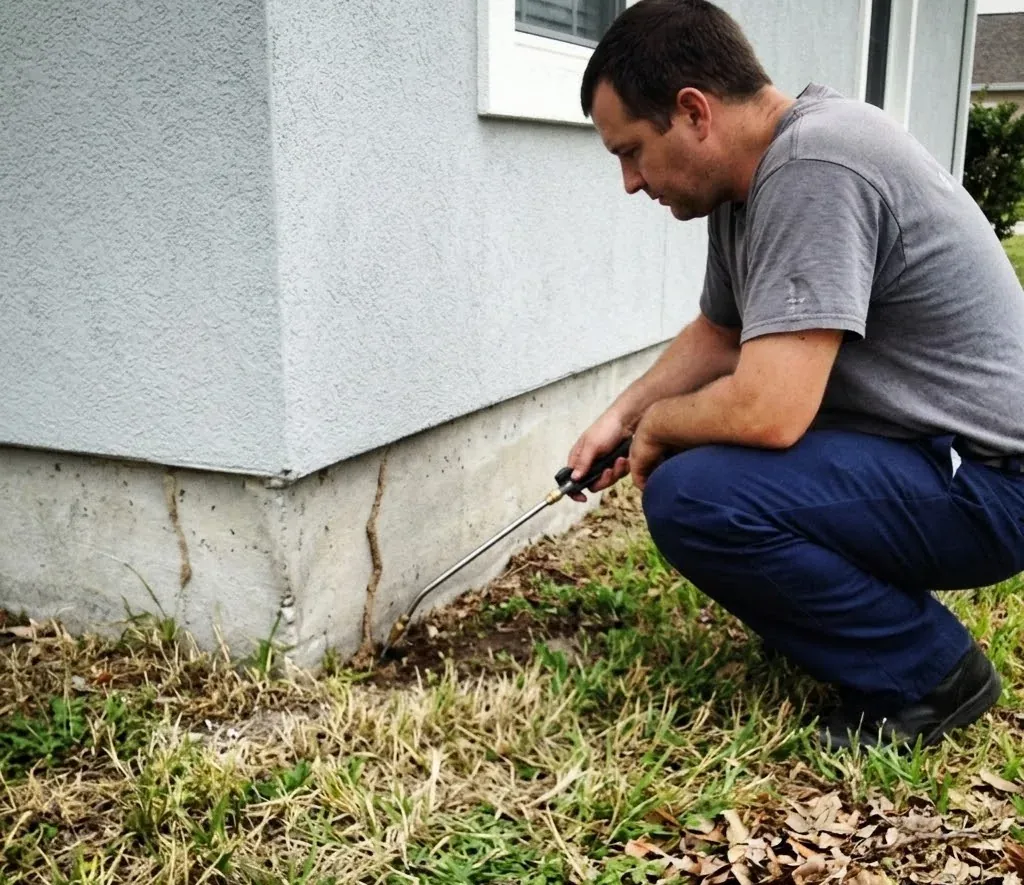
Moisture Around Wood Structures
South Fulton has Georgia’s warm, humid summer climate, and rain can keep shaded deck joints damp. That moisture is useful context when an inspector checks the ledger and framing. Dampness alone does not show termite activity at a particular address.
Homes across South Fulton’s residential areas include outdoor entries and attached decks that inspectors can assess in context. An address near Wilkerson Mill or Interstate 85 can help locate the property; neither landmark indicates termite activity. The house and deck conditions determine what needs review.
In South Fulton, termite questions may begin with a ranch home, split-level, or subdivision lot. The first question may be whether the concern seems limited to one area or appears in several parts of the home.
What an Inspection Checks
- HOME JOINT
- An attached deck’s ledger joins its framing to the house; coverings may limit what an inspector can see.
- SUPPORTS
- Posts and beams carry deck loads, while stairs and rails have their own connections to check.
- EXPOSED WOOD
- A deck’s guardrails and handholds also deserve attention, since loose fittings can make the space less secure for people using the stairs or standing at its edge.
- CALL TIMING
- Their galleries can weaken a board before the damage is obvious from its surface.
- SITE PLAN
- Bait stations require routine checks and clear access; a provider can explain how monitoring fits the plan.
- COST FACTORS
- South Fulton’s warm, humid periods and rain can leave shaded porch joints damp. Swarming may also make wings easier to notice near lights. Record when and where signs appear; seasonal weather gives context, but an inspection assesses the specific deck.
- CONTRACT SCOPE
- an estimated $75–$250
Changes In Wood Beyond Termite Damage
Wood decay. Moisture can soften or discolor porch boards, making decay look like insect damage. Both can affect the same framing, but a soft surface alone does not show termites; an inspection can look for separate pest evidence. Wood decay often leaves a soft or discolored surface, while termite activity may leave galleries inside the board or other insect signs. Since either can affect the same porch member, appearance alone may not settle the cause. An inspector can compare the surface with accessible framing and surrounding conditions.
Preparing the House for Service
The inspector starts at the visible sign and traces nearby framing toward the house connection. They examine accessible joists, posts, stairs, and fasteners, noting areas hidden by paint or trim. This helps distinguish possible termite evidence from moisture effects and identify structural concerns before a treatment plan is chosen.
After reviewing findings, the provider explains which accessible wood can be treated and which areas need separate evaluation. The written contract should state the selected work, access limits, and any monitoring terms. Products must follow their labels. Carpentry repairs may require a separate contractor and scope.
A completed treatment can be the whole job when inspection findings point to a limited target and no scheduled checks remain. Continued service has a purpose when the plan names a condition needing observation, explains visit timing, and states what findings would trigger further work.
HOW FOLLOW-UP FINDINGS CAN GUIDE THE NEXT STEP
| Visible Clues |
Product Label Directions |
|---|
| Early clue in one part of a home | Termite sign assessment |
| Wood damage found after earlier treatment | Entry-point review |
| Evidence appears on separate floors or sides | Treatment delivered; continuing review outlined |
Keep Bait Stations Accessible for Service
From the ground, photograph each clue and note its location, such as beside a stair, post, or house connection. Record when it appeared and whether rain or recent work could affect the area. Do not scrape signs, probe the framing, or apply store-bought pesticide. Leave the assessment and any product use to a pest professional.
Household Precautions During Termite Control
Termites are not a household illness hazard, but damaged framing can affect a deck’s stability. Watch for boards that flex, stairs that shift, or a rail that pulls away. These changes call for an assessment of the affected structure. A termite inspection can identify visible pest evidence; it does not certify that the deck can carry weight safely.
Which Site Details Influence the Final Charge?
The treatment should fit the observed issue and the building. Have the pros we connect you with state the proposed work and cost in writing.Use the guide range for standard treatment work. It may omit visit fees, difficult access, monitoring, reports, or wood repairs. A ranch near Sweetwater Creek State Park still needs property-specific review. Confirm any visit charge and the written work list with the pros we connect you with.Check the full cost bands in pricing guide; Termite Inspection explains how inspection findings shape treatment and follow-up monitoring.