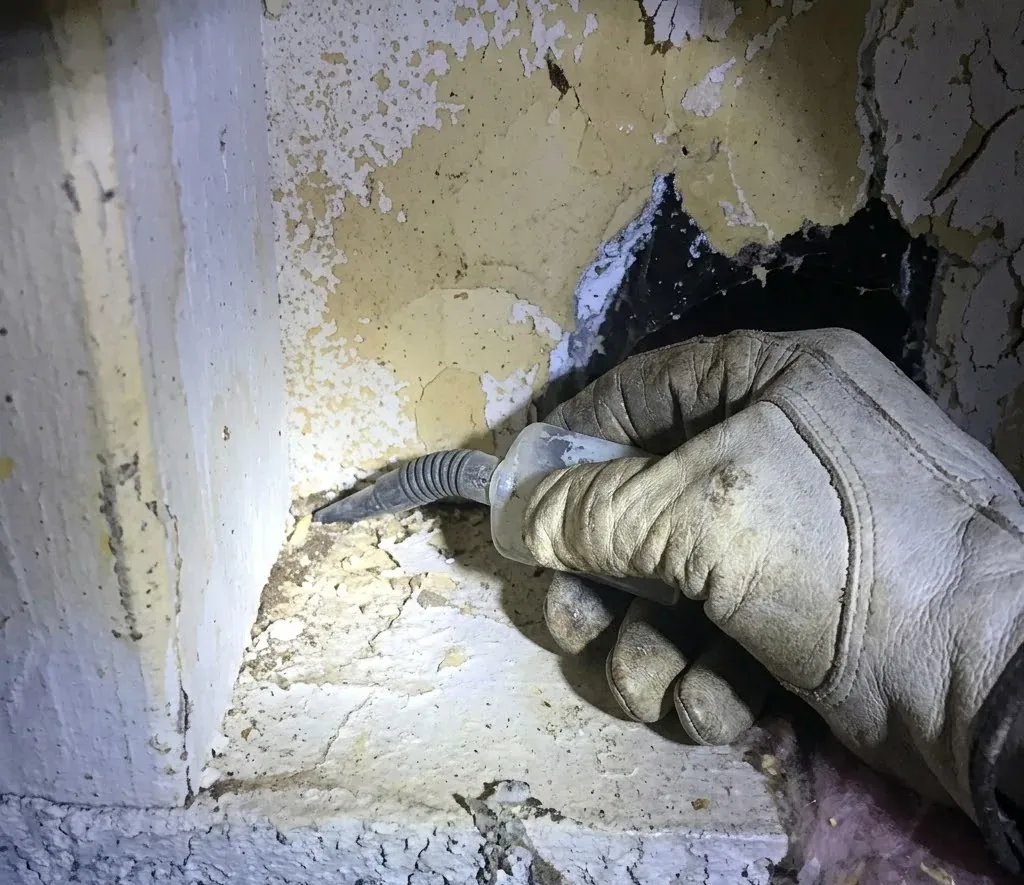
Termite Colonies in Different Habitats
South Fulton’s warm, humid summers provide general regional context for termite service. A ranch near Wilkerson Mill and a split-level near Farris Park still need separate assessment; local weather or landmarks cannot establish activity at either home.
Homes around Trammell Crow Park and Aerotropolis Nature Park sit within a city where property conditions vary. Soil contact, moisture, and prior treatment details matter more than a place name when interpreting new signs.
In South Fulton, termite questions may begin with a ranch home, split-level, or subdivision lot. The first question may be whether the concern seems limited to one area or appears in several parts of the home.
What an Inspection Checks
- CURRENT CLUES
- A rebuilt tube is more useful evidence than an old remnant; record its location before the follow-up.
- PRIOR PLAN
- Wings can mark a swarm, but their location does not establish where termites are feeding.
- SERVICE TERMS
- A soft or blistered patch can have several causes; inspection helps assess possible wood damage.
- ACCESS POINTS
- Live insects need identification because ants and termites can be difficult to distinguish at a glance.
- NEXT REVIEW
- A bait station records activity at its location; its monitoring notes help explain a change.
- COST FACTORS
- Warm, humid weather in South Fulton can coincide with termite swarms, so new wings may appear seasonally. Their appearance does not confirm renewed activity inside. Record when and where they collect, then compare those details with the treatment history.
- QUOTE BASIS
- an estimated $75–$250
Changes In Wood Beyond Termite Damage
An old mud tube can remain after activity has stopped. Its presence may look like termites have returned, but the remnant alone does not show current activity. Inspection findings and nearby evidence help distinguish the two. A leftover mud tube can resemble renewed activity. A professional checks whether it has fresh construction and looks for nearby evidence, then compares those observations with earlier service notes. The tube’s presence alone cannot establish that termites have returned.
Selecting a Control Approach
The professional first reviews the original report, treatment scope, and the owner’s dated observations. The follow-up inspection checks the reported locations and accessible areas for new activity, wood changes, and conditions that may support termites. The findings are compared with prior notes.
After explaining the assessment, the provider describes whether monitoring, a treatment adjustment, or further evaluation fits the findings. The approach depends on the activity, property, and earlier method. A written plan should identify the work and any follow-up terms; repairs may require separate arrangements.
If the visit confirms a treatable source and the agreed work has a clear stopping point, one appointment may be sufficient. Repeated service belongs in the plan when something must be checked after treatment; ask what is observed, how often it is reviewed, and what ends that work.
HOW CONTINUED OBSERVATIONS BUILD ON AN INITIAL VISIT
| Owner Actions |
Inspection Scope |
|---|
| A first concern limited to one area | Repair referral guidance |
| Termite signs noticed after prior service | Wood-condition check |
| Clues span detached sections of one structure | Control completed; post-service scope logged |
Clear Yard Wood Away From the House
The owner can gather reports, make a dated list of observations, and photograph signs from a safe distance. Keep bait stations accessible and leave suspected evidence untouched. Do not spray, scrape tubes, open walls, or disturb stations. Share the records with the provider and ask what areas need inspection.
Household Precautions During Termite Control
Termite activity matters because feeding can weaken wood, including concealed supports. A soft floor or a door that suddenly binds deserves prompt attention; the cause still needs assessment. Keep people away from a loose or sagging area. Do not assume a sound surface means the framing is unaffected. The concern is structural damage, not a household illness.
Which Site Details Influence the Final Charge?
The treatment should fit the observed issue and the building. Have the pros we connect you with state the proposed work and cost in writing.Use the guide range for standard treatment work. It may omit visit fees, difficult access, monitoring, reports, or wood repairs. A ranch near Sweetwater Creek State Park still needs property-specific review. Confirm any visit charge and the written work list with the pros we connect you with.For complete price bands, open pricing guide; Termite Inspection outlines what termite inspection, treatment, and continued monitoring involve.